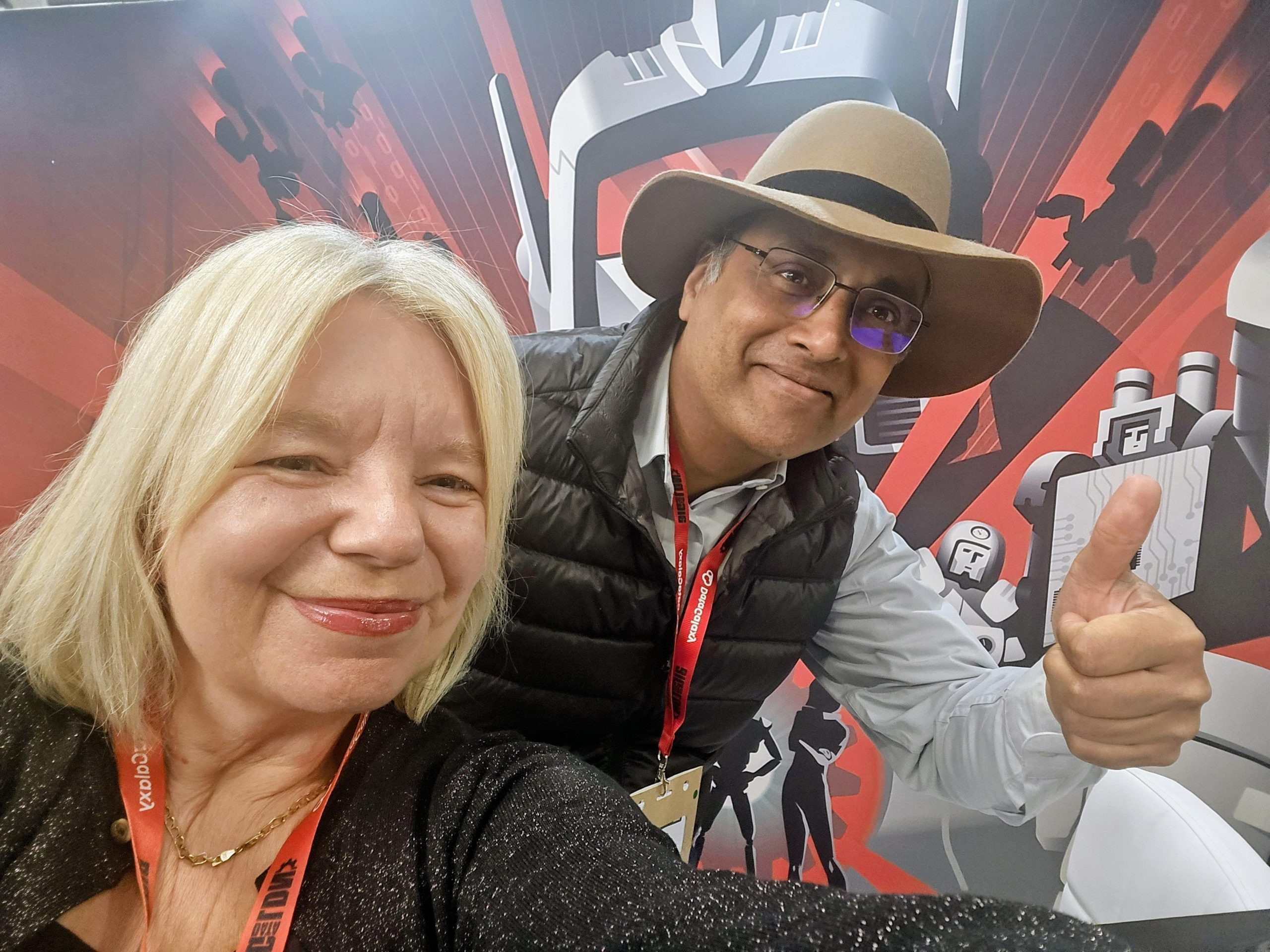
There was an ease, a shared philosophy, and a sense that we were both trying to move organisations forward in a way that felt grounded, human and commercially sharp. Fast forward a few months and here we are, officially welcoming The Data Company into the OMNIADIGITAL partner ecosystem.
Aju’s story begins in 2007, long before AI hype cycles and automation headlines. His company started as a digital transformation consultancy, helping organisations automate manual processes and build simple workflow applications. As he put it, they were focused on “simple workflows or bringing new applications, mobile or web”.
But around 2016, something shifted. While working with enterprise clients, Aju and his team realised that transformation could not rely on applications alone. Data and cloud infrastructure were becoming the real foundations of scale. That insight led them to rebrand as The Data Company in 2018, years before most organisations were talking seriously about data architecture.
Then COVID hit, and like many businesses, their strategy paused. When the world returned, the market had caught up to what Aju already knew. Data was no longer a supporting act. It was the centrepiece.
The one thing leaders often overlook
Aju spends much of his time speaking with CEOs, CIOs and CTOs across industries. When I asked him, what leaders often misunderstand about their data estate, he didn’t hesitate.
He believes the biggest gap is not technology. It is strategy.
As he explained, many organisations jump into transformation without a clear definition of the business outcomes they want to achieve. “A lot of organisations actually miss that step”. Without a joined-up strategy, even the best technology becomes fragmented.
This resonated deeply with me. We have both seen programmes stall because the organisation has not aligned its goals, its sponsorship or its people.
When we talked about the common blockers in transformation, Aju was clear. Technology is rarely the issue. Culture is.
Resistance to change, siloed decision making and misaligned communication between departments create friction that no tool can fix. As he put it, “communication between departments gets blurred or misaligned” which leads to siloed decisions that slow everything down.
This is where the partnership between OMNIADIGITAL and The Data Company becomes powerful. The OMNIA EFFECT!
We bring the digital resilience, governance, culture and strategic alignment. They bring deep engineering, automation and data expertise. Together, we cover the full transformation lifecycle.
Aju shared three essentials:
- A clear business architecture that everyone understands and supports
- Strong sponsorship, including budget, people and leadership
- Realistic expectations about the pace of change and the unknowns that come with emerging technologies
He also highlighted the rising cost of AI adoption. Many organisations underestimate the consumption costs of agent-based automation and find themselves revisiting business cases that no longer hold. “The cost of ownership can be quite high and destroy the business case”.
This honesty is one of the reasons I value working with him.
Why this partnership works
When I asked Aju why The Data Company chose to partner with OMNIADIGITAL, he said it came down to shared philosophy. Both organisations care deeply about delivering real business outcomes, not just technology outputs.
He also highlighted the complementary nature of our experience. OMNIADIGITAL brings deep delivery capability across public sector, charity, retail and manufacturing. The Data Company brings strength in financial services, healthcare and engineering. Together, we create a broader, richer capability for clients.
What excites Aju about the next 18 months
In his words, the acceleration of AI is creating an exciting moment for organisations that are ready to embrace it. The ability to bring structured and unstructured data together, query it through language models and create repeatable data products is transforming what is possible.
He believes the organisations that succeed will be the ones that adopt AI thoughtfully, with governance, architecture and strategy at the core.
A final surprise
Near the end of our conversation, I asked Aju something more personal. What might people be surprised to learn about him?
He smiled and revealed that he is in a band. A lead guitarist, no less. “We do a lot of slow rock and 70s and 80s music”.
It was the perfect reminder that behind every transformation programme, every data strategy and every AI roadmap, there are real people with creativity, passions and stories that make them who they are.
Closing thoughts
This partnership is about more than capability. It is about alignment, shared values and a belief that transformation should feel human, strategic and enabling.
About the Author

Lucy Lynch is Chief of Staff at OMNIADIGITAL working closely with leadership teams to ensure strategy, delivery, and execution remain tightly aligned. She operates at the intersection of planning and action, helping organisations focus on what matters most and translating intent into coordinated, high-impact outcomes.
In her role, Lucy partners directly with the CEO to drive strategic transformation initiatives aligned to long-term business objectives. She plays a central role in orchestrating delivery across projects, accounts, and stakeholders, ensuring momentum is maintained and priorities are executed effectively as the organisation grows.
Lucy also leads on brand development and market positioning, strengthening OMNIADIGITAL’s visibility and competitive edge through clear messaging and purposeful engagement. Alongside this, she is instrumental in building and nurturing a data-led community, creating curated events, roundtables, and thought-leadership forums that connect practitioners, leaders, and partners around shared challenges and opportunities.
A key part of Lucy’s work involves leveraging academic and research partnerships to help deliver future-ready, evidence-based solutions tailored to client needs. This ensures that innovation is grounded in insight, rigour, and real-world applicability.
Lucy thrives where strategy, people, and possibility meet. She brings clarity, structure, and energy to complex environments, helping organisations remain aligned, agile, and prepared for what’s next.